

Global organizations today face a critical challenge: delivering exceptional customer service across dozens of languages while controlling costs and maintaining brand consistency. As markets expand internationally, 74% of customers are more likely to repurchase from companies providing native language support. Yet many businesses struggle with fragmented multilingual operations that drain resources and frustrate customers. This guide walks you through implementing an optimized multilingual call center process using AI-driven solutions that cut costs by up to 40% while dramatically improving customer satisfaction and operational efficiency across global markets.
Table of Contents
- Understanding The Multilingual Call Center Challenge
- Preparing To Implement A Multilingual Call Center Process
- Executing The Multilingual Call Center Process Step-By-Step
- Verifying And Optimizing Multilingual Call Center Performance
- Partner With Call Center Experts For Multilingual Success
- Frequently Asked Questions
Key takeaways
| Point | Details |
|---|---|
| AI reduces costs significantly | Implementing AI-driven multilingual solutions cuts operational costs by 30-40% while maintaining service quality |
| Cultural context drives loyalty | Preserving cultural nuances beyond translation boosts customer satisfaction and long-term retention rates |
| Shared control ensures consistency | A unified decision layer maintains brand messaging and policy application uniformly across all languages |
| Native language preference dominates | Over 70% of customers prefer support in their native language, directly impacting purchase decisions |
| LLMs enhance quality monitoring | Large language models augment human evaluators to catch errors and maintain consistent call quality standards |
Understanding the multilingual call center challenge
Business leaders expanding into international markets quickly discover that offering support in customers' preferred language improves loyalty and satisfaction far beyond simple translation. Customers expect native language support because it builds trust and eliminates communication barriers that lead to frustration and abandoned purchases. When your support team speaks their language fluently, customers feel valued and understood.
Cultural intelligence represents the hidden complexity most organizations underestimate. Translation converts words, but cultural context embeds meaning into conversations. A phrase that reassures customers in one culture might sound dismissive in another. Your multilingual call center must navigate idioms, communication styles, and cultural expectations that vary dramatically across regions. Without this depth, even accurate translations fall flat.
Balancing cost and quality creates constant tension in multilingual operations. Traditional staffing models require hiring native speakers for each language, multiplying headcount and training expenses exponentially. As you add languages, costs spiral while maintaining consistent quality becomes nearly impossible. Many organizations find themselves trapped between expensive human-only models and cheaper but inadequate automated solutions.
Inconsistent messaging across languages damages brand reputation in subtle but serious ways. When your English support team provides different answers than your Spanish or Mandarin teams, customers notice. These discrepancies erode trust and create confusion about your policies and values. Outsourcing multilingual contact center services requires rigorous processes to ensure every customer receives identical information regardless of language.
Key challenges include:
- Scaling support to cover 20+ languages without proportional cost increases
- Maintaining cultural relevance while preserving brand voice and messaging
- Training agents across diverse linguistic and cultural backgrounds consistently
- Monitoring quality when supervisors may not speak all supported languages
- Integrating technology that works seamlessly across different character sets and grammar structures
Preparing to implement a multilingual call center process
Successful multilingual operations begin with honest infrastructure assessment. Evaluate your current call center technology for AI readiness and multilingual capabilities. Legacy systems often lack the flexibility to handle multiple languages efficiently or integrate with modern conversational AI platforms. Identify gaps in your CRM, routing systems, and analytics tools that could bottleneck multilingual scaling.
Define your language priorities based on hard data rather than assumptions. Analyze customer demographics, market penetration goals, and revenue potential by region. Not all languages deserve equal investment initially. Focus resources on languages that serve your largest customer bases or highest-growth markets. This strategic approach prevents spreading resources too thin across dozens of languages simultaneously.
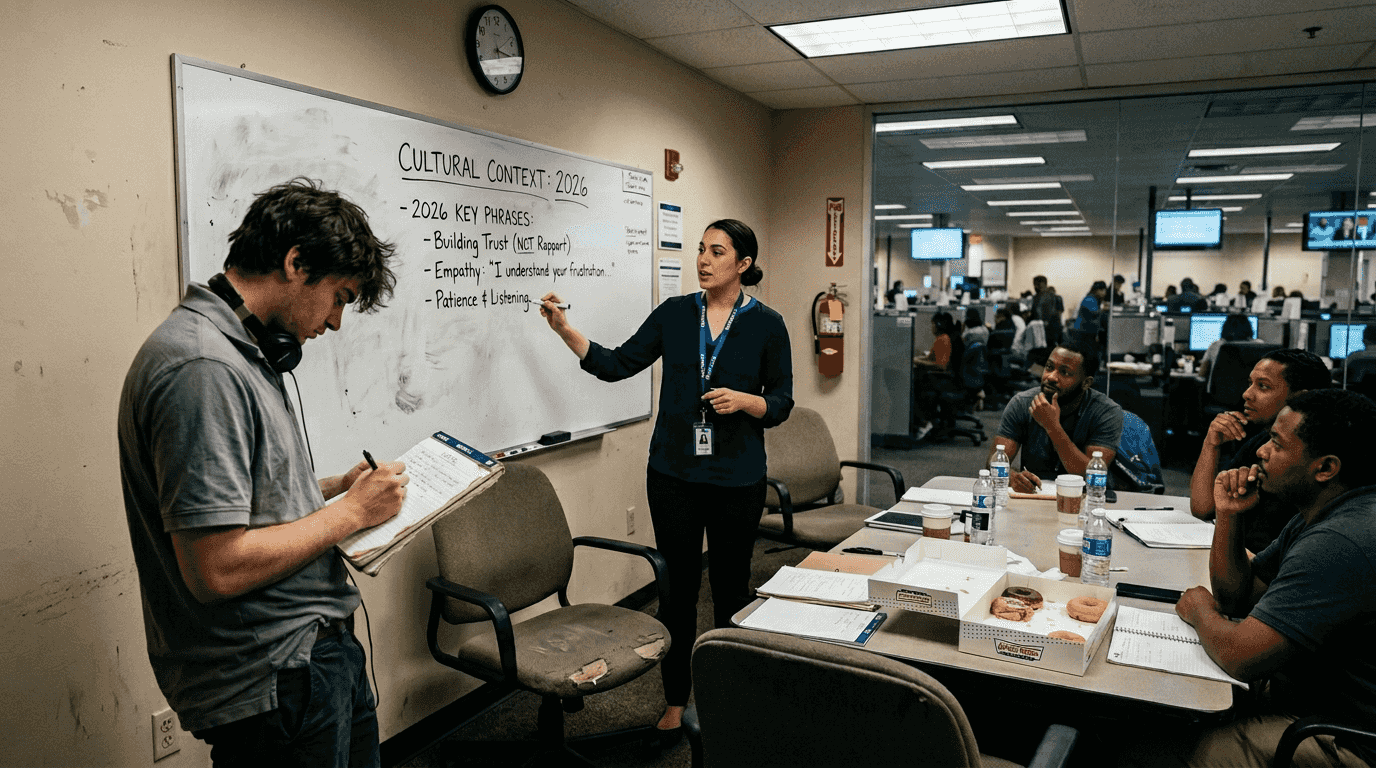
Cultural training transforms good agents into exceptional ones. Prepare teams with programs that go beyond language proficiency to teach regional business etiquette, communication preferences, and cultural sensitivities. An agent fluent in Japanese who doesn't understand Japanese business formality will frustrate customers despite perfect grammar. Partner with cultural experts or experienced partners in outsourcing multilingual services who bring this knowledge.
Technology selection determines your operational ceiling. Choose platforms supporting a shared decision layer that preserves context and applies consistent logic across languages. This architecture ensures every customer interaction follows identical business rules regardless of language. Avoid solutions that simply translate inputs and outputs without understanding intent or maintaining conversation context.
Pro Tip: Build integration roadmaps before purchasing technology. Map how your multilingual AI platform will connect with existing CRM systems, knowledge bases, and analytics tools. Seamless data flow between systems prevents information silos that fragment the customer experience.
Plan comprehensive integrations covering:
- CRM systems for unified customer history across all language interactions
- Knowledge management platforms providing consistent answers in every language
- Quality monitoring tools that evaluate performance regardless of language
- Analytics dashboards tracking metrics by language, region, and cultural segment
- Workforce management systems optimizing agent scheduling across time zones
Executing the multilingual call center process step-by-step
Implementation success depends on methodical execution across five critical steps. Each builds on the previous, creating a robust multilingual operation.
-
Integrate AI-driven multilingual conversational agents as your first layer of customer interaction. These systems handle routine inquiries in dozens of languages simultaneously, reducing costs by 30-40% while maintaining 24/7 availability. Deploy gradually, starting with your highest-volume languages, then expanding as you validate performance and customer acceptance.
-
Ensure your shared control layer manages context and policy uniformly across every language channel. This decision-making engine sits above translation, understanding customer intent and applying business logic consistently. When a customer switches languages mid-conversation or contacts you through different channels, the control layer maintains conversation history and context seamlessly. Multilingual conversational AI delivers real-time interactions preserving intent and context far better than simple translation.
-
Train agents on cultural nuance and AI tool collaboration simultaneously. Your human agents need skills in two areas: working alongside AI systems to handle escalations smoothly, and applying cultural intelligence the AI cannot replicate. Focus training on edge cases, emotional situations, and culturally sensitive topics where human judgment remains essential. This hybrid approach maximizes both efficiency and quality.
-
Monitor and optimize call quality leveraging large language models that augment human evaluation. LLMs can review far more interactions than human supervisors, flagging potential issues for human review. This dual-layer approach catches errors human evaluators might miss while scaling quality assurance across languages your supervisors may not speak fluently.
-
Scale support dynamically based on market demand and language requirements. AI-powered systems let you expand into new languages without proportional hiring. As you enter new markets, activate additional language support quickly, then refine based on actual usage patterns and customer feedback.
Pro Tip: Start with pilot programs in two or three strategic languages before full deployment. This approach lets you refine processes, identify integration issues, and build internal expertise before scaling across your entire language portfolio.

| Implementation Phase | Timeline | Key Metrics | Success Criteria |
|---|---|---|---|
| AI Platform Integration | 2-3 months | System uptime, integration completeness | 99%+ uptime, full CRM connectivity |
| Initial Language Deployment | 1-2 months | Resolution rate, customer satisfaction | 80%+ AI resolution, 4.0+ CSAT |
| Agent Training Program | 1 month ongoing | Certification rate, handling time | 90%+ certification, reduced AHT |
| Quality Monitoring Setup | 1 month | Review coverage, accuracy | 100% interaction sampling capability |
| Market Expansion | 3-6 months | Language adoption, cost per contact | 5+ new languages, 30%+ cost reduction |
Partner with outsourcing multilingual call center solutions providers who bring proven implementation frameworks and avoid common pitfalls that delay deployments.
Verifying and optimizing multilingual call center performance
Continuous measurement separates good multilingual operations from exceptional ones. Track customer satisfaction scores broken down by language preference to identify where experiences vary. You might discover that certain languages consistently score higher or lower, revealing training gaps or cultural misalignments needing attention. These insights guide targeted improvements rather than broad, inefficient changes.
Compare manual versus AI-assisted quality monitoring to understand where each approach excels. Human evaluators bring cultural intuition and emotional intelligence that AI cannot match. However, LLMs improve call quality monitoring by supporting human evaluators and flagging potential errors across massive interaction volumes. The combination catches more issues than either method alone.
| Monitoring Approach | Strengths | Limitations | Best Use Case |
|---|---|---|---|
| Manual Human Review | Cultural nuance detection, emotional intelligence, complex situation assessment | Limited scale, potential bias, language expertise required | High-value customers, escalations, cultural sensitivity training |
| AI-Assisted LLM Review | Massive scale, consistency, multilingual capability, pattern recognition | Misses subtle cultural cues, requires human validation, initial training needed | Routine interaction audits, compliance checks, trend identification |
| Hybrid Model | Comprehensive coverage, balanced insight, continuous improvement | Requires coordination, higher initial investment | Enterprise multilingual operations, regulated industries |
Response time data reveals whether you meet modern customer expectations. 75% of consumers expect instant answers, pushing centers to optimize speed without sacrificing quality. Monitor average handling time, first-contact resolution, and wait times by language. Slower performance in specific languages often indicates training needs or technology limitations requiring attention.
Continuously iterate agent training and AI model tuning based on performance data. Your multilingual operation should improve monthly as you identify patterns in customer inquiries, common failure points, and emerging needs. Regular model updates keep your AI current with language evolution, new products, and changing customer expectations. Implement multilingual call center quality monitoring systems that automatically surface improvement opportunities.
Key optimization activities include:
- Weekly reviews of AI resolution rates by language to identify training gaps
- Monthly customer satisfaction analysis highlighting language-specific trends
- Quarterly cultural competence assessments ensuring agents maintain sensitivity
- Ongoing AI model refinement incorporating new vocabulary and conversation patterns
- Regular technology audits confirming integrations perform optimally across all systems
Partner with call center experts for multilingual success
Implementing advanced multilingual AI call centers requires specialized expertise most organizations lack internally. Experienced partners bring proven frameworks, avoiding costly mistakes and accelerating time to value. You gain access to established technology relationships, cultural training programs, and optimization methodologies refined across hundreds of deployments.

Streamlined implementation without major infrastructure risks lets you focus on core business while experts handle complex multilingual operations. Professional providers offer specialized ongoing support covering technology updates, agent training evolution, and continuous performance optimization. This partnership model delivers enterprise-grade multilingual capabilities without the overhead of building expertise from scratch. Consider working with a trusted partner in outsourcing multilingual contact center services who understands both the technology and cultural dimensions of global customer engagement.
Frequently asked questions
What are the biggest benefits of AI in multilingual call centers?
AI-driven multilingual solutions deliver 30-40% cost reductions by handling routine inquiries without proportional staffing increases. Scalability improves dramatically as you can add languages quickly without extensive hiring. Customer satisfaction rises because AI provides instant responses in preferred languages 24/7, while human agents focus on complex situations requiring cultural nuance and emotional intelligence.
How do multilingual conversational AI systems preserve context across languages?
Decision-layer AI ensures consistent customer experience by managing context and policies uniformly rather than just translating words. This architecture understands customer intent, maintains conversation history, and applies business rules identically regardless of language. The system prevents the errors and inconsistencies that plague simple translation approaches, delivering coherent interactions even when customers switch languages mid-conversation.
What common mistakes should business leaders avoid when implementing multilingual call centers?
Avoid treating multilingual support as a simple translation task without considering cultural context and communication preferences. Underinvesting in cultural competence training alongside technology deployment creates fluent but culturally tone-deaf interactions that frustrate customers. Failing to continuously measure performance and gather customer feedback by language prevents you from identifying improvement opportunities and optimizing operations effectively.
How can large language models enhance quality monitoring in call centers?
LLMs support human evaluators in call quality monitoring by highlighting potential oversights and comparing their assessments with human reviews. This dual review approach flags discrepancies for investigation, catching errors either method might miss alone. LLMs scale quality assurance across languages supervisors don't speak, ensuring consistent standards while reducing the manual review burden on human teams.